The Affordability Gap: What SLC’s $139K Income Requirement Means for the Wasatch Front & Back Real Estate Market in 2026
Are you looking to buy a home in Salt Lake City, Park City, or anywhere along the Wasatch Front or Back? If so, you’ve likely noticed a significant shift in the market. It’s no longer just a local feeling; the data proves it. Affordability in Utah is officially strained.
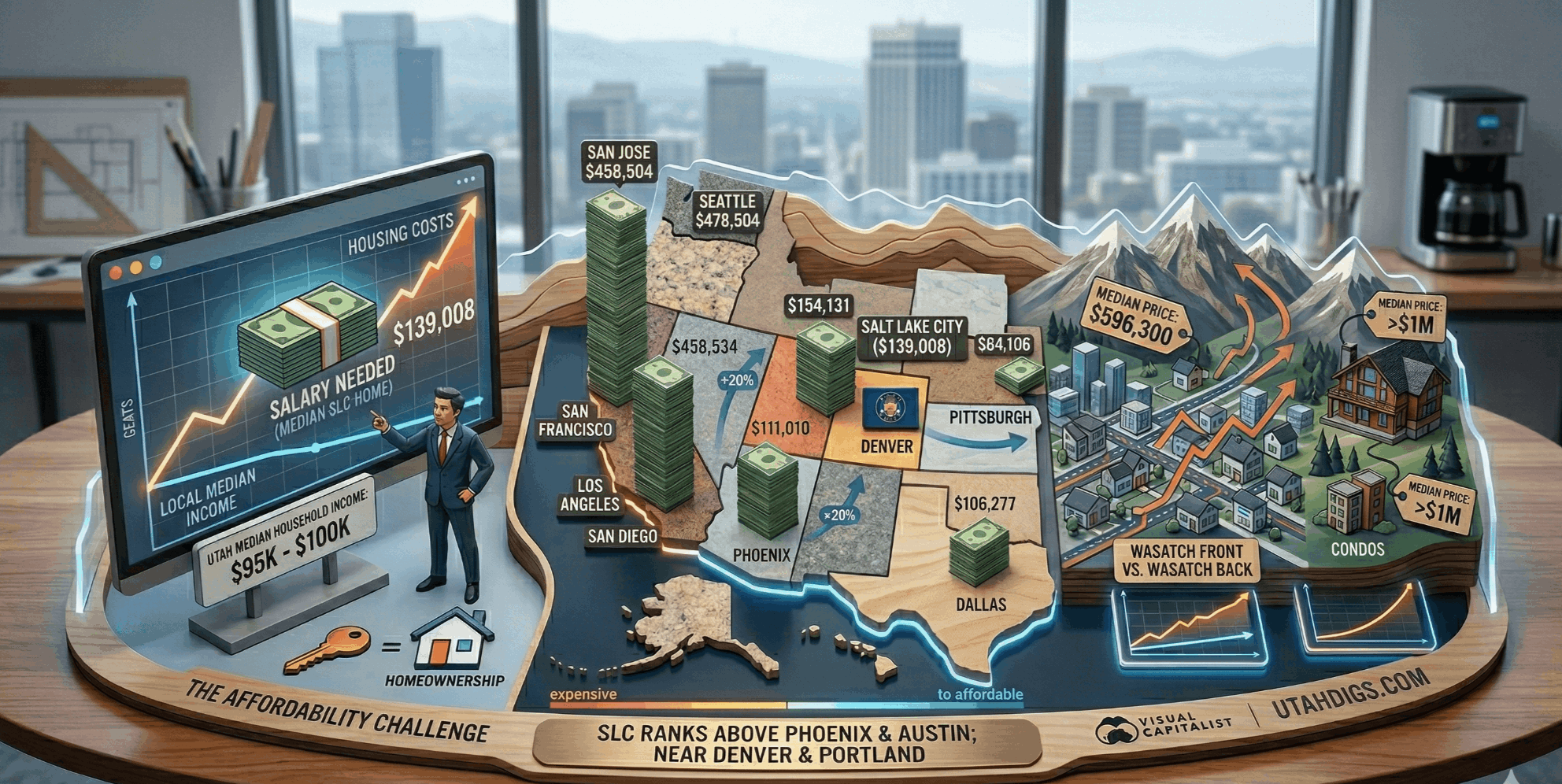
A groundbreaking new map from Visual Capitalist , based on Q4 2025 data, reveals a startling reality: To afford a median-priced home in the Salt Lake City metro area, households now need to earn a salary of $139,008 annually.
This isn’t just a number; it’s a critical threshold that is redefining who can achieve the American Dream in Utah. This article breaks down what this $139K requirement means, how our local median household income stacks up, and how Utah compares to the rest of the nation.
The Core Question: What Salary Do You Need to Buy a Home in Salt Lake City?
According to the data, the entry point for a median-priced home in the SLC metro area is a six-figure income.
| SLC Market Metric | 2026 Data (Projected/Q4 2025) |
| Salary Needed to Afford | $139,008 |
| Median Home Price | $596,300 |
| Monthly Mortgage Payment | $3,244 |
Note: Calculations assume a 20% down payment, a 30-year fixed-rate mortgage, and include principal, interest, taxes, and insurance.
For many Utah families, this $139,008 required salary is a monumental hurdle. It places SLC among a growing list of "expensive" metros where the cost of housing has far outpaced wage growth.
How SLC’s "Salary Needed" Stacks Up Against Utah’s Median Income
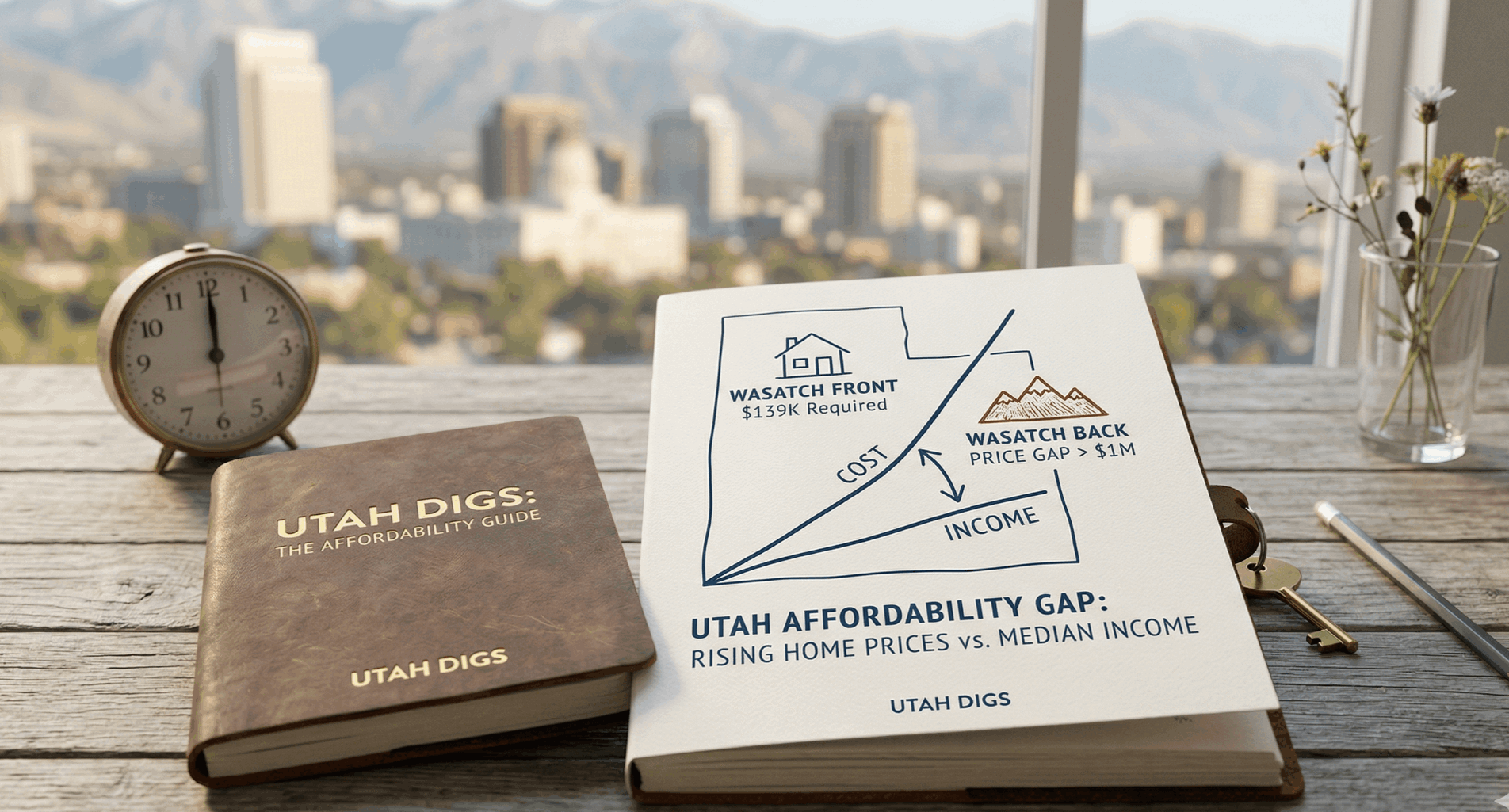
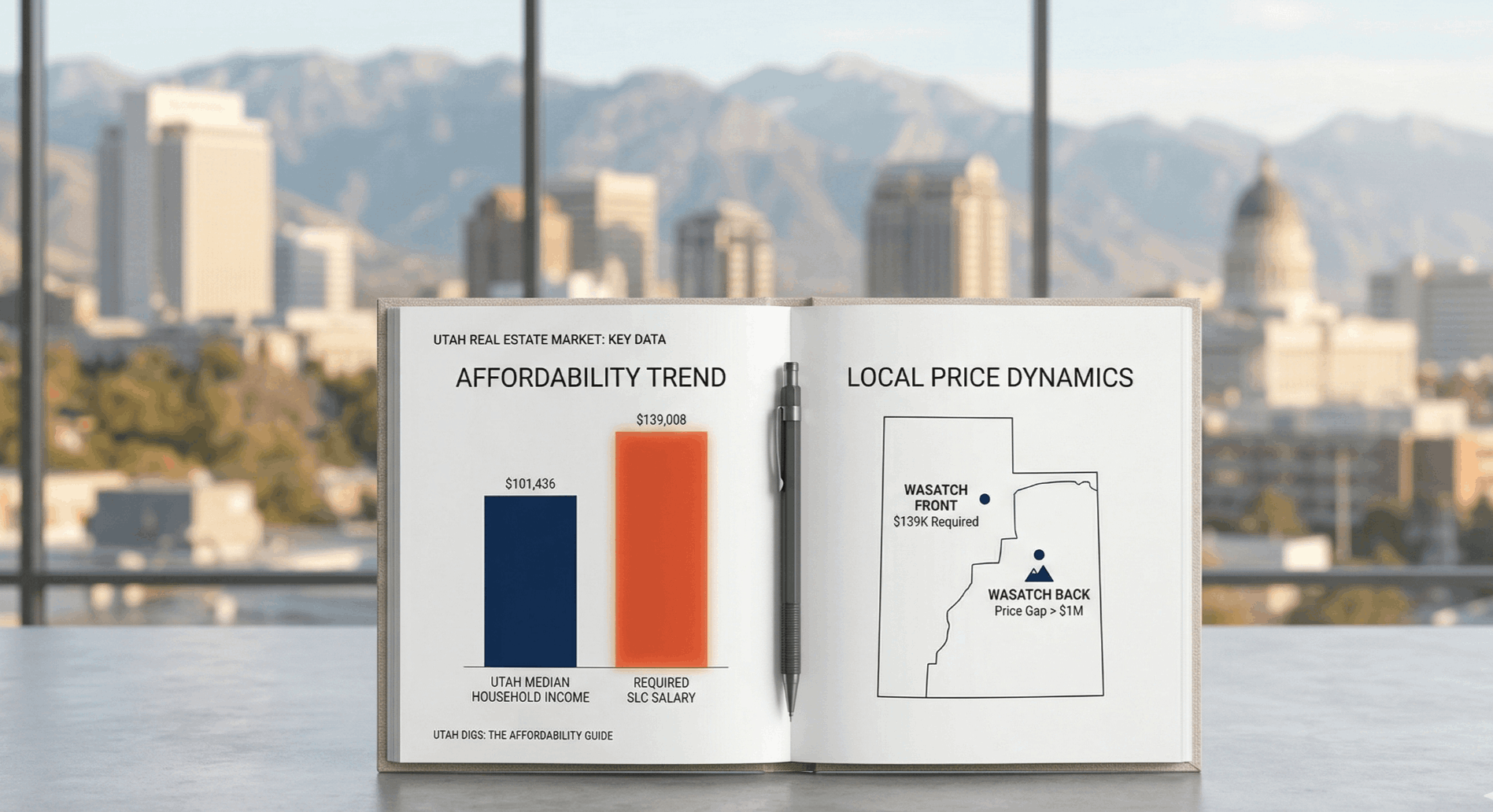
This is where the true affordability gap is exposed. While the required salary is $139K, Utah’s actual median household income is significantly lower.
While final 2026 figures are pending, estimates based on recent Census data put Utah’s median household income closer to $95,000 - $100,000.
The Affordability Math Isn't Adding Up
This creates an "Affordability Gap" of roughly $40,000. The average Utah household is earning $40,000 less than what is required to comfortably afford the average home.
This means that for a typical family, a median-priced home is simply out of reach without:
-
A massive down payment (much larger than 20%).
-
A non-traditional loan product.
-
Significantly compromising on home size, condition, or location.
Salt Lake City vs. The Nation: How Utah Real Estate Compares
Is this an isolated "Utah problem"? No. But Utah has moved from being a relatively affordable hidden gem to a full-fledged high-cost market.
Where SLC Fits in the National Ranking
Out of the 50 major metros analyzed by Visual Capitalist, Salt Lake City is no longer in the middle of the pack. We are now firmly in the upper tier of expensive cities.
Metros More Expensive Than SLC:
-
The Giants: San Jose ($458K), San Francisco ($321K), San Diego ($235K), Los Angeles ($224K), New York ($200K), Boston ($190K).
-
The Peer Cities: Seattle ($188K), Miami ($156K), Denver ($154K), Portland ($144K).
Salt Lake City’s $139K requirement is just below these peer cities. It is significantly higher than other major hubs like Austin ($132K), Phoenix ($111K), and Dallas ($106K).
Where is "Affordable" Now?
For context, the national salary needed to afford a median-priced home is $106,731 . Salt Lake City’s requirement is nearly $33,000 higher than the national average.
The data shows that real affordability is now primarily found in the Midwest and South:
-
Pittsburgh: $64,106
-
Cleveland: $66,280
-
Detroit: $74,264
Only 12 of the 50 cities analyzed have median-priced homes within reach of households earning the national median income. Salt Lake City is NOT one of them.
The Local Impact: Wasatch Front vs. Wasatch Back
While the data focuses on the SLC metro area, as locals, we know the story is more nuanced.
Wasatch Front (Ogden, Provo, Salt Lake)
This area has borne the brunt of the rapid cost-of-living increase. For a first-time buyer, the Front is extremely challenging. The path to homeownership now often starts 30-40+ miles outside of the SLC core, in areas like Eagle Mountain, Saratoga Springs, or far-west Weber County, just to find a price point that is "manageable."
Wasatch Back (Park City, Heber, Kamas)
The data in the chart drastically understates the reality for the Wasatch Back. The Wasatch Back is its own micro-market, often exceeding the price points of even the SLC metro by a massive margin.
For a median home price of $596,300 (as listed for SLC), you would struggle to find anything but a small, older condo in the Park City area. The required income for the Wasatch Back is likely closer to the Denver ($154K) or Miami ($156K) thresholds.
The Verdict: The Utah Market in 2026
The Visual Capitalist data is a wake-up call for the Utah real estate market.
-
Affordability is the #1 Issue: The gap between local wages and home prices has never been more extreme.
-
The "Six-Figure Standard" is Real: Earning $100K is no longer a guarantee of comfortable homeownership in SLC; it is the absolute bare minimum for entry-level housing.
-
Utah has Joined the Coastal Cities: Our housing dynamic now more closely mirrors Denver, Portland, and even parts of California than it does our own past.
For buyers, this means being more strategic, more prepared, and more patient than ever before. For the Utah community, it highlights the urgent need for conversation about housing supply, density, and local wage growth.
Contact us today to discuss how to best navigate the Utah real estate market.
Sources: https://www.visualcapitalist.com/mapped-salary-needed-to-buy-home-in-50-u-s-cities-2026/
Categories
Recent Posts
Leave a Reply