
Are New Homes Cheaper Than Resale Homes in Utah Right Now?
Short answer: Nationally, yes — in October 2026 the median new home sold for $391,300, about $25,000 less than the median existing home at $416,700. In Utah, not quite. A new home here still lists for slightly more than a resale home, but the gap is down to about 4.7%, one of the smallest in America. And once you count the rate buydowns Utah builders are throwing in, a new home can be the cheaper monthly payment even when it isn't the cheaper price. Here's the full picture, and what it means whether you're buying or selling.
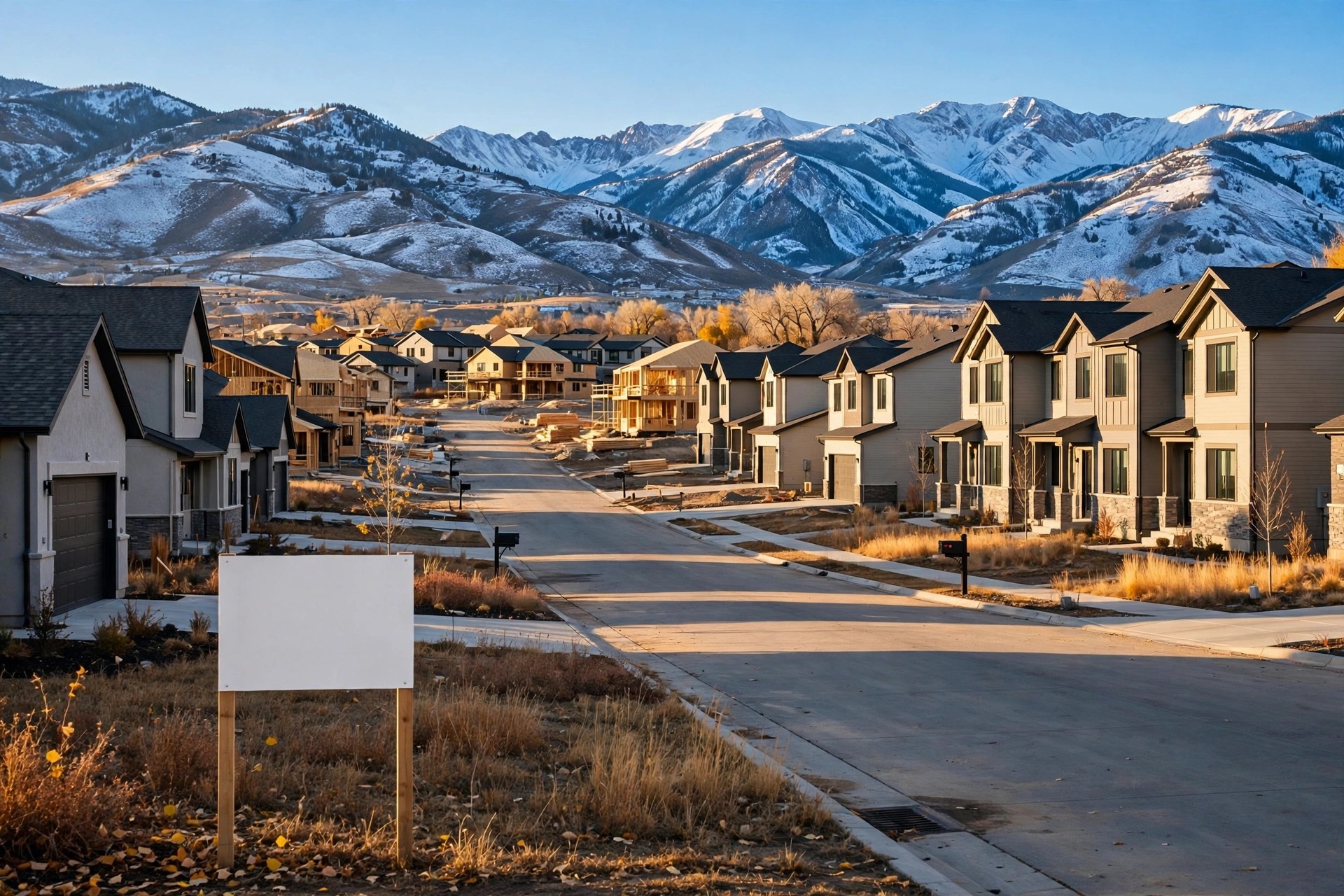
What just happened nationally
October 2026 produced a number the U.S. housing market almost never sees: the median new home sold for less than the median existing home.
| October 2026 | Median price | Change | Source |
|---|---|---|---|
| New homes | $391,300 | −3.2% vs. a year ago | U.S. Census Bureau / HUD |
| Existing homes | $416,700 | +0.4% vs. a year ago | National Association of REALTORS® |
New-home sales jumped 14.2% from September to an annual pace of 701,000, the strongest month of 2026, while existing-home sales slid to 3.75 million, the lowest pace since August 2010.
Two honest caveats before anyone declares a comeback:
- It's a clearance sale, not a recovery. Year-to-date new-home sales still trail 2025 by 3%, and September's sales figure was revised down. One strong month, helped by heavy discounting, is not a trend.
- The spike itself is preliminary. The Census Bureau flags a wide confidence interval on that 14.2% monthly jump. The direction is real; the exact size may move.
Builders are creating demand with price cuts and rate buydowns. Resale sellers, as a group, are not — and the sales numbers show it.
Why are builders dealing so hard?
Because they have to. Builders ended October with about 470,000 new homes for sale, roughly 8 months of supply, and their November sentiment survey (NAHB/Wells Fargo) shows discounting at post-Covid highs:
- 46% of builders cut prices in November, with the average cut holding at 6%.
- 68% offered sales incentives — the 20th straight month at 60% or more.
A resale seller can wait. A builder carrying finished inventory, construction loans, and a sales office cannot. That difference in motivation is the whole story of this market.
Meanwhile, plenty of resale sellers are choosing a third option: not selling at all. In a recent week, homes pulled off the market equaled 48.7% of the homes newly listed (Simonsen/Altos Research data) — owners are delisting rather than meeting buyers on price.
Has Utah flipped? Not yet — but it's close
Utah's resale market is bigger and pricier than the national one. The statewide median sale price was $521,000 in October 2026, down 2.6% from a year earlier, with 4.7 months of supply (Utah Association of REALTORS®).
On the new-vs-resale question, Utah has not flipped. In Realtor.com's 2026 state report cards, newly built homes listed in Utah carried a median price just 4.7% above existing homes. Five states have already flipped to new homes being cheaper. Utah isn't one of them — but a 4.7% premium is one of the smallest in the country, and it's measured on list prices, before a single incentive is counted.
That last part matters, because of what's in the next section.
The buydown math: where Utah buyers actually win
The market 30-year rate sat around 7.1% in mid-November 2026. Against that, Wasatch Front builders are advertising rates like these on select homes, through their preferred lenders (offers change fast — verify current terms with the builder):
- 1.99% for year one (then 2.99%, then a 3.99% ARM rate) — EDGEhomes
- 3.75% FHA — Ivory Homes, plus closing-cost help on completed homes through year-end
- 3.99% first-year rates — Tri Pointe and Fieldstone, on select homes
- 4.999% fixed — Woodside Homes, on homes closed by year-end
Run the payment math and the 4.7% premium can disappear. On a $500,000 loan, principal and interest only:
- At a 7.1% market rate: about $3,368/month
- At a 5.0% builder rate: about $2,684/month
That's roughly $685 a month — which is why so many Utah buyers are choosing new construction right now even at a slightly higher sticker price. The price comparison says resale wins by a nose. The payment comparison can say the opposite.
Utah's split market: condos and townhomes vs. single-family
Here's what I'm seeing in my own market, and it's not one story — it's two.
The struggling side is attached product in the high-growth corridors. The areas that absorbed the most new condo and townhome construction are where sellers and builders are now competing hardest for a limited pool of buyers: Herriman first, the southwest valley including Daybreak in South Jordan, Riverton and Bluffdale, and the Utah County corridor of Lehi, Saratoga Springs and Eagle Mountain.
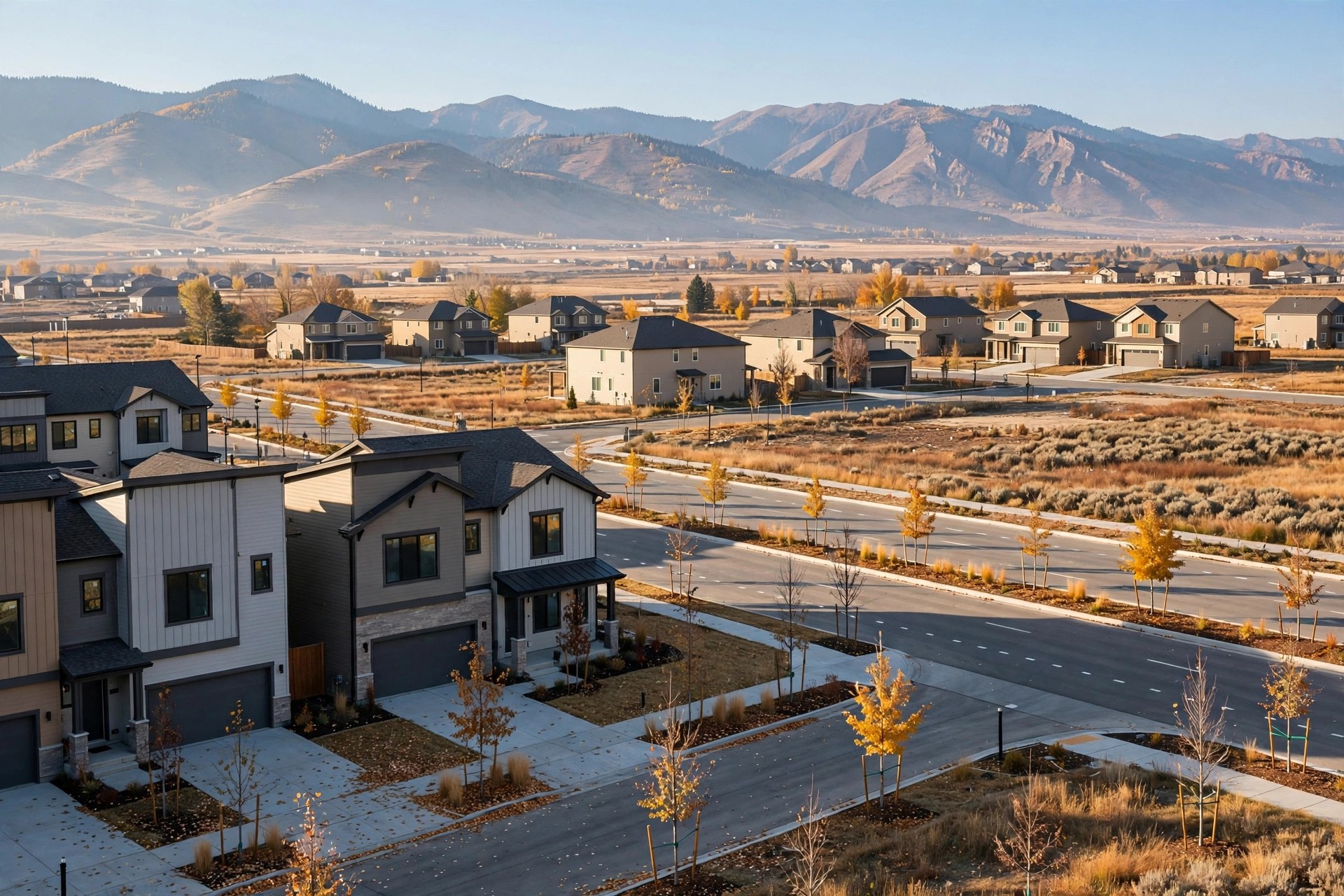
The supply data backs the split. Utah residential permits are up 11% this year, but the growth is led by condos and townhomes, up 23%, and the average value per permitted home is down about 6% (Kem C. Gardner Policy Institute, Ivory-Boyer Construction Database). Builders flooded the attached segment with smaller, cheaper product — and that segment is now the softest.
Single-family homes are still doing well. Detached homes in established neighborhoods, and new single-family in the same growth corridors, are holding up far better. Utah's statewide numbers show a cooling market, not a crashing one — I ran the crash question in detail in Are Home Prices Crashing in Utah?, and October's figures are in the Utah Housing Market Update.
Buying new construction? My two warnings
The builder deals are real, and for the right buyer a new home is the smartest purchase in this market. But after 25+ years of doing this, there are two things I warn every buyer about before they sign a builder contract:
- Location. Builders build where the land is — which usually means the edge of the valley, farther from established schools, jobs, and amenities. A great rate on a house in the wrong place is still a house in the wrong place, and you'll live with the location long after the buydown expires.
- Resale. When you sell, your competition is the builder's next phase, brand-new, with fresh incentives attached. In the condo and townhome corridors especially, a three-year-old unit can sit while the builder discounts the identical new one next door. Buy where resale demand is proven, not just where the incentives are loudest.
Two practical checks on top of that: a buydown is temporary, so know your rate and payment in year three, not just year one; and lot premiums and design-center upgrades add up fast, so price the finished home, not the base model. Having your own agent on a builder purchase costs you nothing in most cases and keeps someone in your corner — see why buyers work with me.
Selling a resale home against builder incentives
If you're selling, you are now competing with a builder who will cut price 6% and buy your buyer's rate down to 4%. My advice to sellers is simple:
Be the best deal, or offer more for the same price.
Win on price, or win on value — more house, better condition, better lot, better location than the new build at your number. What doesn't work is pricing like it's 2021 and waiting. Salt Lake metro sellers are already getting the message: 31.8% of listings here took a price cut in October, the highest share of any large metro in the country, two months running (Realtor.com). And the sellers who won't adjust are leaving instead — expired, canceled, and withdrawn listings are up 32% to 57% year over year across the Wasatch Front counties (UtahRealEstate.com data).
A resale home has real advantages a builder can't copy: an established neighborhood, a mature lot, no construction timeline, and a location the new subdivisions can't offer. Price it as the best deal in its comparison set and those advantages sell. Start with a real number, not an automated guess — get a free home valuation and I'll review it personally. My full approach is on my Sell page.
FAQs
Are new homes cheaper than resale homes in Utah right now?
Not on sticker price — new construction in Utah lists for about 4.7% more than existing homes, one of the smallest premiums in the U.S. But with builder rate buydowns running 2 to 5 points below market rates, a new home can carry a lower monthly payment than a comparably priced resale home.
Why are builders offering rates like 1.99% and 3.99%?
Because they have inventory to move — about 8 months of supply nationally — and a rate buydown is often cheaper for a builder than a straight price cut. 68% of builders were offering incentives in November 2026, a post-Covid high. The low rates are real, but they're usually temporary (a 1.99% first year steps up), tied to select homes, and require the builder's preferred lender.
Is a builder buydown a good deal?
It can be, if the home and the location are right and you can comfortably afford the payment after the buydown steps up. Compare the total cost over the years you'll actually live there, not just the first-year payment, and compare it against what the same money buys in resale.
Where in Utah are new homes struggling most?
In the high-growth corridors where condo and townhome construction piled up: Herriman, Daybreak and the southwest valley, and the Lehi–Saratoga Springs–Eagle Mountain corridor in Utah County. Single-family homes, new and resale, are holding up much better.
How do I compete with new construction when selling my home?
Be the best deal in your comparison set, or offer more for the same price — better condition, lot, and location than the new builds. Price to today's comparable sales from day one; Utah homes that start high are increasingly the ones that get pulled off the market.
Thinking about buying new, or selling against it?
Whether you're weighing a builder's offer or pricing a resale home against one, the right move depends on the specific property and neighborhood. Call or text me at (801) 337-5057, or get in touch — I'll give you a straight read on your situation.
— Blair Allen, Utah Digs | Kelly Right Real Estate · Utah license 5499328-SA00
Sources: U.S. Census Bureau / HUD, New Residential Sales, October 2026; National Association of REALTORS®, Existing-Home Sales, October 2026; NAHB/Wells Fargo Housing Market Index, November 2026; Realtor.com, Grading the States: Affordability & Homebuilding Report Cards, 2026 Update; Utah Association of REALTORS®, Monthly Indicators, October 2026; Kem C. Gardner Policy Institute, Ivory-Boyer Construction Database; Altos Research via Compass. Builder offers as advertised in November 2026, on select homes through preferred lenders; terms change without notice. This post is general information, not financial advice.
Recent Posts

Leave a Reply