
Is Winter a Bad Time to Sell a House in Utah?
Is Winter a Bad Time to Sell a House in Utah?
No — winter is not a bad time to sell a house in Utah. It's a different time. You'll face fewer buyers, but far fewer competing listings, and the buyers out touring homes in December and January usually have a deadline. Price it right and prep it well, and a Utah home sells in any month.
Every fall I hear the same question from homeowners, from Holladay to the Heber Valley: Should I list now, or wait for spring? The honest answer is that winter has real advantages nobody talks about — and real trade-offs nobody should hide from you. Here's both sides, with the numbers, so you can decide with your eyes open.
- What actually changes in the winter market?
- Why is there less competition in winter?
- Who is buying a house in December and January?
- What are the honest trade-offs of selling in winter?
- What does Utah's market look like heading into winter 2026?
- Why is Utah's winter different?
- How do you sell a home well in winter?
- Should you wait for spring instead?
- Frequently asked questions
- Thinking about selling this winter?
What actually changes in the winter market?
The seasonal slowdown is real — nobody honest will tell you otherwise. The National Association of Realtors (NAR) tracks the pattern every year, and nationally it looks like this:
| Season | Existing homes sold per day (U.S.) | Median days on market |
|---|---|---|
| Spring peak (April–June) | 16,530 | 33 |
| Summer (July–September) | 16,200 | 35 |
| Fall (October–November) | 13,810 | 41 |
| Winter (December–February) | 11,380 | 49 |
Source: National Association of Realtors, Economists' Outlook, "Navigating the Housing Market: A Seasonal Perspective." National averages.
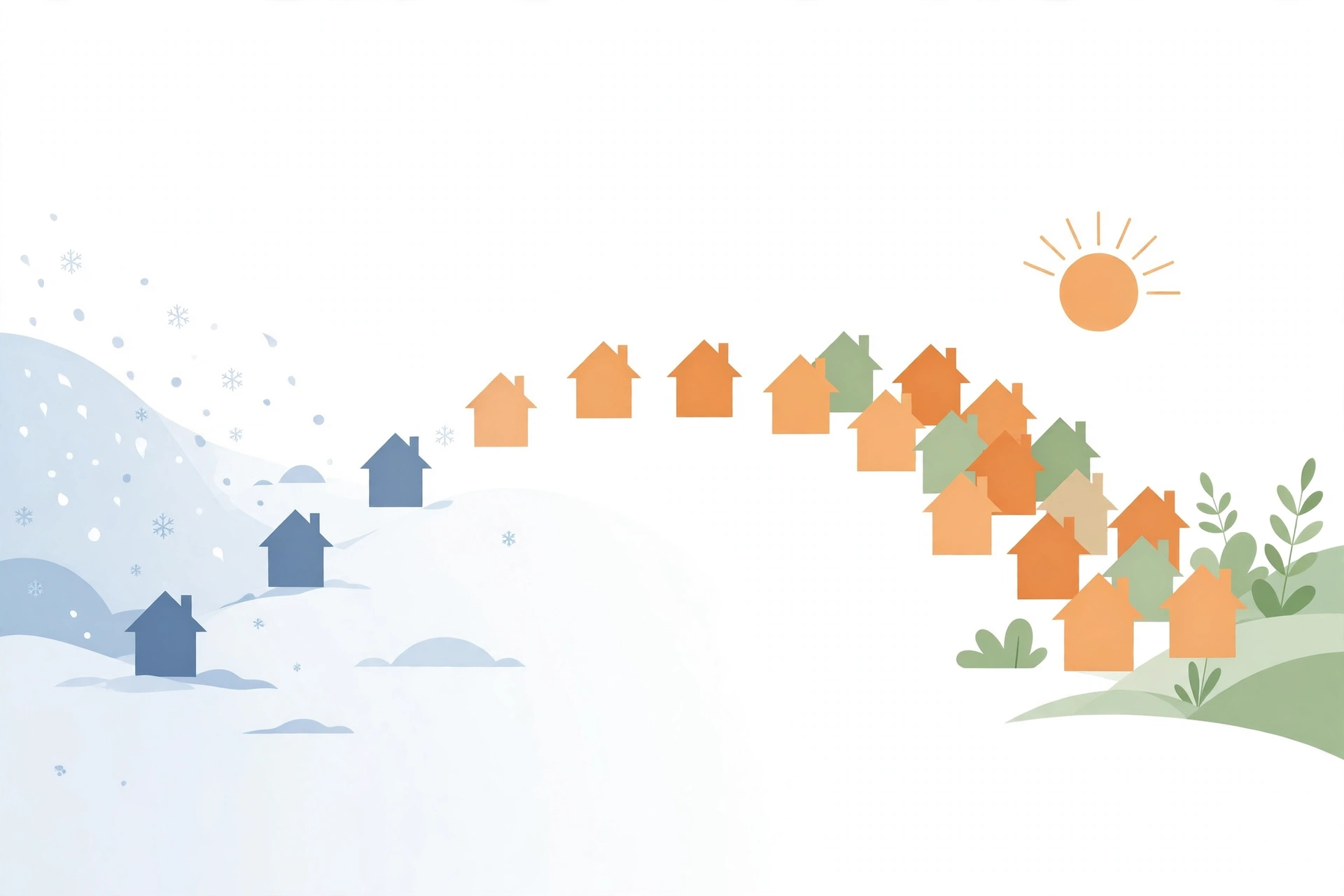
Two things jump out of that table. First, winter is slower — homes take about two weeks longer to sell, and roughly 11,400 homes a day still change hands nationally in the coldest months. Slower is not stopped. Second — and this matters if you live here — NAR's own regional breakdown says the West is the region least affected by seasonality. Utah's swing between spring and winter is milder than the national numbers suggest.
Why is there less competition in winter?
Here's the advantage winter sellers actually hold: most of your competition decides to wait.
According to NAR's seasonal research, December is usually the month with the fewest homes for sale of the entire year, and the number of listings typically drops about 9.4% from November to December alone, as owners hold off until spring. At the same time, December home sales typically rise about 3.9% from November — buyers are still closing while sellers are sitting out.
Do the simple math. In May, your home in Sandy or Draper might be one of dozens of similar listings a buyer scrolls past. In December, it might be one of a handful — and the freshest one agents have seen in weeks. Standing out is worth a lot in this business.
Who is buying a house in December and January?
Winter buyers are rarely browsing for fun. NAR names the reasons buyers show up at year-end, and they match what I see after 25 years of winters here:
- Job relocations that start in January — new year, new role, hard deadline
- Year-end tax timing — closing before December 31 matters to some buyers' finances
- School timing — families who want kids settled in a new school for the second term
- Life events that don't check the calendar — growing families, divorces, estates, job changes
- First-time buyers — about 31.8% of existing-home sales nationally, and their share typically rises slightly in December
A buyer touring your home in a snowstorm is not killing a Saturday. They're trying to solve a problem on a schedule. That's the most serious kind of buyer there is — and serious buyers write real offers.
What are the honest trade-offs of selling in winter?
Fair's fair — here's the other side, because you should hear it from me before you hear it from the market:
- Fewer buyers overall. Roughly 11,380 existing homes sell per day nationally in winter versus 16,530 at the spring peak (NAR). Your buyer pool is smaller. Period.
- Longer market time. Plan on it: a median of about 49 days on market in December–February nationally versus 33 in April–June (NAR). Budget your patience and your carrying costs accordingly.
- Spring owns the price peak — nationally. NAR's data shows typical prices run highest in late spring. That's an average across different homes in different months, not a discount stamped on your house — but it's the honest reason some sellers choose to wait.
- Showings are harder work. Snow, early darkness, and holiday schedules complicate everything. The walk needs clearing, the house needs to feel warm the second the door opens.
- Photos and curb appeal fight the season. Dormant lawns and gray light make most winter listings look tired. That's a problem if you do nothing about it — and an opening if you do, because a warm, bright, cared-for home stands out more against a field of dreary photos.
- Pricing has to be right the first time. Spring's crowds can rescue an optimistic price with a bidding war. January won't. In winter, precision beats hope.
What does Utah's market look like heading into winter 2026?
The latest published Utah numbers are from September 2026 (the October report hadn't been released when this was written), from the Utah Association of Realtors:
| Utah statewide, September 2026 | |
|---|---|
| Median sales price | $530,000 (up 1.9% from a year earlier) |
| Homes for sale | 17,528 (up 3.6%) |
| Months of supply | 4.7 |
| Median days from listing to sale | 65 |
| Share of original list price received | 96.1% |
In Salt Lake County, the September median sales price was $553,600, the median home took 56 days from listing to sale, and sellers received 96.3% of their original list price.
Read that honestly and it says: this is a market where buyers are picky and pricing discipline decides outcomes — in every month, not just winter. Homes are selling, at 96%+ of asking, for sellers who price and prep correctly. The calendar is not the main character in that story. Your price and your preparation are.
Why is Utah's winter different?
Utah doesn't hibernate, and neither do its two housing markets.
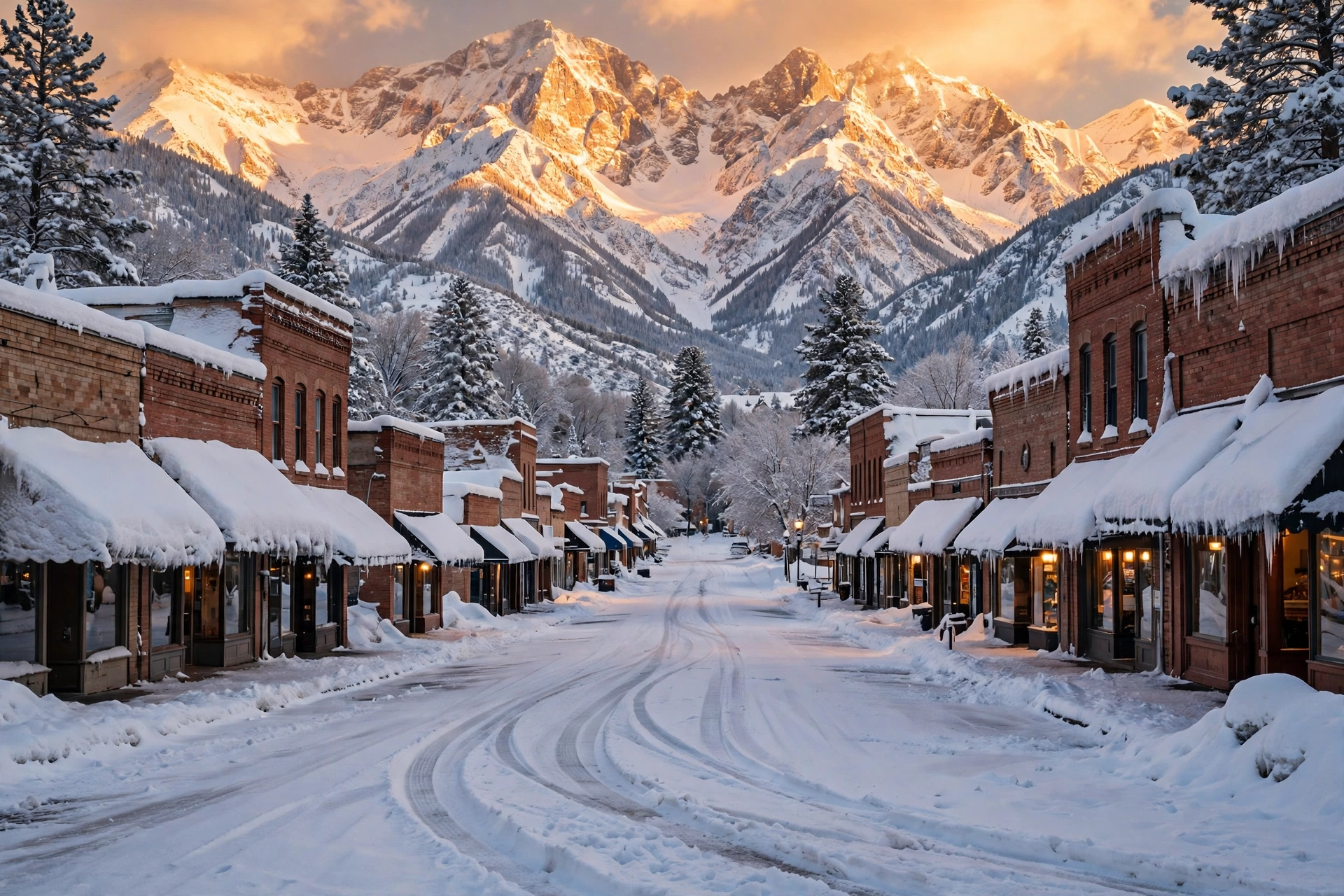
On the Wasatch Back, winter is high season, not off season. When the snow flies, the Park City area, the Heber Valley, and the Kamas Valley fill with exactly the people who buy second homes and mountain properties — in person, in town, riding lifts and walking Main Street. A mountain home shows its whole reason for existing in January.
On the Wasatch Front, the buyers are mostly local movers with local reasons — a job change, a baby, a divorce, a parent moving closer — and those reasons don't pause for weather in Millcreek, Cottonwood Heights, or Sandy. Add NAR's finding that the West has the mildest seasonal swing in the country, and Utah winter is simply less "winter" than the national story.
How do you sell a home well in winter?
If you list this winter, here's the playbook — the same one I'd hand any seller on my own street:
- Price to the market you have. Winter buyers are serious, but they can count. Start with a real, neighborhood-level number — my free home valuation is built from actual comparable sales, not an algorithm's guess.
- Win the photo shoot. Clear the walk and driveway, turn on every light, and shoot on the brightest day available. Warm and bright beats big and dark, every time.
- Make showings effortless. Flexible hours, a warm house, a shoveled path. A buyer who braved the snow to see your home is motivated — don't make them work for it.
- Handle the winter paperwork up front. Furnace service records, roof and gutter condition, any history with ice dams or frozen pipes — have it ready. Fewer surprises means faster, firmer decisions.
- Use the quiet. With fewer competing listings, your home can be the new listing every agent in your area notices this week. That's a spotlight spring never gives you.
That's the short version of how I work with sellers — in winter, the fundamentals don't change; they just matter more.
Should you wait for spring instead?
Sometimes, yes — and I'll tell you if I think you're one of those cases. If your timing is completely flexible, nobody's relocating, and your home genuinely shows best with green grass and long evenings, spring is a perfectly reasonable choice. NAR's numbers say demand peaks there.
Just be clear about what you're choosing. Waiting for spring means listing alongside everyone else who waited — the year's most crowded field of sellers, all competing for the same buyers, many of them with homes just like yours. And if your life is actually ready now — a job, a family change, a next home you've found — then winter is not a penalty box. It's a thinner field with more serious buyers in it.
The best time to sell is when you need to sell. The market rewards a prepared, well-priced home in every month of the year — and punishes an overpriced one in June just as surely as in January.
Frequently asked questions
Is December a bad month to sell a house in Utah?
No. December is usually the month with the fewest homes for sale all year (National Association of Realtors), so your competition is at its lowest, and sales typically edge up from November as motivated buyers close before year-end. January is historically the softest month for sales — December is not the dead month people assume.
Do homes sell for less money in winter?
Nationally, typical prices peak in late spring and early summer (NAR) — but that's an average across different homes sold in different months, not a discount applied to your house. In Utah's latest published report (September 2026, Utah Association of Realtors), sellers received 96.1% of their original list price. Your home's condition and pricing strategy move your number far more than the month does.
How long does it take to sell a house in Utah in winter?
Plan on longer than spring. Nationally, median days on market run about 49 days in December–February versus 33 days in April–June (NAR). In Utah, the median home took 65 days from listing to sale in September 2026 (Utah Association of Realtors). Well-priced, well-prepared homes beat those medians in any season.
Should I wait until spring to sell my Utah home?
Only if your timing is flexible and your home shows best in spring. Waiting puts you in the year's most crowded field of sellers. If a job move, a family change, or your next purchase says go now, winter's serious buyers and thin competition can genuinely work in your favor.
What should I do differently to sell my home in winter?
Price precisely, make your photos bright and warm, keep walks cleared and the house warm for showings, and have furnace and roof paperwork ready before buyers ask. Start with a free home valuation so your price is grounded in your neighborhood's actual sales — not a guess.
Thinking about selling this winter?
If you're weighing a winter listing in Sandy, Draper, Holladay, Cottonwood Heights, Millcreek, the Heber Valley, the Kamas Valley, or the Park City area, start with what your home is worth today — get a free home valuation — and then let's talk timing honestly. Some homes should wait for spring. Plenty shouldn't. I'll tell you which one yours is, either way.
Call or text me at (801) 337-5057, or get in touch here.
— Blair Allen, Utah Digs | Kelly Right Real Estate
25+ years · $265M+ sold · 550+ homes sold
Sources: National Association of Realtors, Economists' Outlook — "December's Market Dynamics: Sales, Inventory, and Buyer Trends" and "Navigating the Housing Market: A Seasonal Perspective" (historical seasonal patterns, national). Utah Association of Realtors, Local Market Update and Monthly Indicators for September 2026, current as of October 10, 2026 — the most recent monthly report published at the time of writing; October 2026 figures had not yet been released. Seasonal patterns are averages across many different homes; your neighborhood's numbers are what matter, and that's exactly what a valuation is for.
Recent Posts


Leave a Reply