When Can You Sell a House in Probate in Utah?
When Can You Sell a House in Probate in Utah?
The short answer
You can sell a house in probate in Utah once the court has appointed a personal representative and issued that person Letters Testamentary (if there is a will) or Letters of Administration (if there is no will). In most informal, unsupervised cases, the personal representative does not then need a separate court order for an ordinary sale to an unrelated buyer. Before appointment, no one has authority to sign for the estate or convey the house.
That timing point is the one families miss most. Being named in a will, being the oldest child, or having lived in the house does not by itself give you authority to sell it. Authority comes from the court appointment.
Why you cannot sell before appointment
Utah probate is governed by the Utah Uniform Probate Code, Title 75 of the Utah Code.
Utah Code Section 75-3-103 says that, to acquire the powers and undertake the duties and liabilities of a personal representative, a person must be appointed by order of the court or registrar, qualify and be issued letters, and that administration of an estate is commenced by the issuance of letters.
The Utah Courts informal probate page puts the same point in practical terms. Probate is required if the estate includes real property of any value, and the court issues Letters Testamentary or Letters of Administration that the personal representative presents to third parties, such as banks and title companies, to show they were appointed.
- A family member is not the seller until they are the appointed personal representative.
- A buyer, lender, and title company will look for the Letters as proof of authority.
- A contract or deed signed before appointment, by someone acting for the estate without that authority, creates a title problem instead of a clean sale.
There are also filing clocks to know. The Utah Courts page notes an informal probate case may not be filed until 120 hours (five days) have passed since the death, citing Utah Code Section 75-3-307, and the case must generally be filed within three years of the death under Utah Code Section 75-3-107. If more than three years have passed, the Courts page directs families to a different determination-of-heirs process and to a probate attorney.
What you can do while you wait for Letters
- Secure the home, keep insurance in place, and keep the mortgage, taxes, and utilities current where estate circumstances allow.
- Gather the death certificate, the original will if there is one, and the names and addresses of heirs and people named in the will.
- Get a clear picture of value. Start with a free home valuation so the family is deciding from a number, not a guess.
- Talk through pricing, repairs, clean-out, and timing with an agent, so the listing can move quickly once Letters are issued.
- Keep receipts and records. Once appointed, the personal representative has a duty to prepare an inventory within three months after appointment, under Utah Code Section 75-3-705.
What to hold off on until Letters arrive: signing a listing agreement or purchase contract as the estate, signing a deed, or promising a buyer a closing date that assumes authority you do not have yet.
Blair Allen helps Utah families sell a home through probate, working with personal representatives from first filing to sold. That first-filing-to-sold view matters here, because the best sale timeline is planned before the Letters arrive, then executed as soon as they do.
Informal, formal, and supervised: does the court have to approve the sale?
For most Utah families, no separate sale hearing is required. Utah Code Section 75-3-710 gives a personal representative the same power over title to estate property that an absolute owner would have, in trust for creditors and others interested in the estate, exercisable without notice, hearing, or order of court unless otherwise specifically provided. Utah Code Section 75-3-704 says a personal representative shall proceed without adjudication, order, or direction of the court, except for a supervised personal representative. Utah Code Section 75-3-714 authorizes a personal representative, acting reasonably and subject to the will and any formal-proceeding order, to dispose of an asset, including land, at public or private sale.
- Supervised administration. Under Utah Code Section 75-3-501, supervised administration runs under the continuing authority of the court, and a supervised personal representative is responsible to the court and subject to its directions. Expect court direction to shape a sale in a supervised case.
- A restriction in the will or a court order. If the will or a formal-proceeding order restricts the power, the restriction controls.
- A sale to the personal representative or a close connection. Under Utah Code Section 75-3-712, that kind of conflict-of-interest sale is voidable by an interested person unless the will or the decedent's own contract expressly authorized it, or the court approved it after notice to interested persons.
For the full picture, see our probate real estate sales guide for Utah.
Selling the house does not end probate
The personal representative is a fiduciary under Utah Code Section 75-3-703 and must settle and distribute the estate in accordance with any probated will and Title 75, for the best interests of successors to the estate. Sale proceeds are estate funds, not a direct payout to the family.
Under Utah Code Section 75-3-801, a personal representative may publish notice to creditors requiring claims within three months after first publication or be forever barred, and Section 75-3-803 sets a general outer limit of one year after death for claims that arose before death, subject to the notice rules. Under Section 75-3-1003, an estate may generally be closed by sworn statement no earlier than four months after the original appointment, after the claim period has expired and the estate has been fully administered.
Practical takeaway: you can often list and sell soon after appointment, but plan the proceeds, the claim period, and the closing of the estate as three separate steps, with an attorney guiding the legal side.
Four things that can slow or block a sale
- No appointment yet. No Letters, no authority to convey.
- Disagreement among interested persons. A refused Waiver of Notice, an objection, or a dispute about who should serve can move a case from informal to formal and add a hearing.
- An insider buyer. A sale to the personal representative or a related party raises the voidable-transaction rule in Section 75-3-712.
- Unclear title, debts, or restrictions. A will restriction, a court order, liens, or creditor claims change what must be resolved, disclosed, or paid from proceeds, and in what order.
A practical timeline
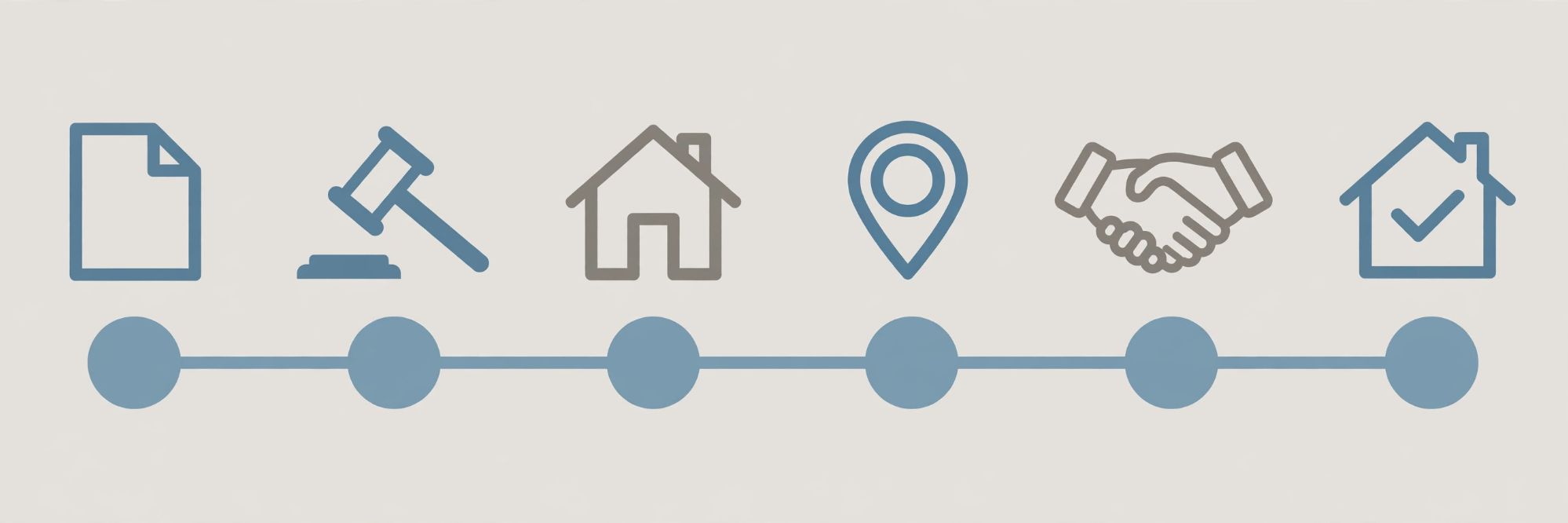
| Step | What happens | Timing anchor |
|---|---|---|
| 1. Death and first days | Secure the home, locate the will, order death certificates | Informal filing may not begin until 120 hours (5 days) after death |
| 2. File for probate | File application, original will if any, death certificate, Waivers, and Acceptance in district court | Generally within 3 years of death |
| 3. Appointment | Court or registrar appoints the personal representative and issues Letters | Authority to act for the estate starts here |
| 4. Prepare and list | Inventory work, confirm value, prepare the home, list it | Inventory due within 3 months after appointment |
| 5. Sell | Personal representative signs as the estate; proceeds go to the estate | No separate court order for most ordinary, unsupervised sales |
| 6. Administer and close | Handle claims, expenses, and taxes; distribute; close the estate | Sworn-statement closing generally no earlier than 4 months after appointment |

Frequently asked questions
Can I list the house before probate is finished?
Yes, in most cases, once a personal representative has been appointed and issued Letters. Finishing probate and selling the house are not the same finish line.
Can I sell the house before anyone is appointed personal representative?
No, not as the estate. Under Utah Code Section 75-3-103, a person must be appointed, qualify, and be issued Letters to acquire a personal representative's powers.
Do I need court approval for every probate sale in Utah?
Not for most ordinary sales. Sections 75-3-710 and 75-3-704 give an unsupervised personal representative power that can generally be exercised without a separate court order. Supervised administration, a will or court-order restriction, and insider sales are the main exceptions.
What are Letters Testamentary and Letters of Administration?
They are the court-issued documents that prove appointment. Letters Testamentary are issued when there is a will; Letters of Administration when there is no will.
What if the house was in a trust or had a transfer-on-death deed?
Then the house may not be a probate asset at all, and a different transfer path may apply. How the house was titled at death controls. Have an attorney confirm title before listing.
How long after death do we have to start probate?
Generally within three years after the death under Utah Code Section 75-3-107, with limited exceptions in that section.
Can the personal representative buy the house themselves?
That is a conflict-of-interest sale under Utah Code Section 75-3-712 and it is voidable unless the will or the decedent's contract expressly authorized it, or the court approved it after notice to interested persons. Get legal advice first.
Next step
Separate the two questions: when will Letters be issued, and what will the sale look like the day they are? For the sale side, get a free home valuation, read the Utah probate real estate sales guide, or contact us at 801-337-5057.
This post is general information about Utah probate and real estate, not legal or tax advice. Probate decisions affect legal rights, creditor claims, and taxes. Talk to a Utah probate attorney and, where tax questions are involved, a CPA about your specific estate before you act.
Sources: Utah Code Title 75, Sections 75-3-103, 75-3-107, 75-3-501, 75-3-703, 75-3-704, 75-3-705, 75-3-710, 75-3-712, 75-3-714, 75-3-801, 75-3-803, and 75-3-1003 (le.utah.gov, checked 2026-11-19); Utah Courts, Informal Probate self-help page (utcourts.gov, checked 2026-11-19).
Recent Posts









Leave a Reply